Recycling and Sustainability at Hedge Trimming Lee
Hedge Trimming Lee has integrated an ambitious sustainability programme into every service we deliver. Our approach balances practical garden care with responsible disposal: we minimise landfill, maximise reuse, and work within the boroughs' waste separation frameworks to keep London green. Our promise is clear — reduce waste, divert green material to useful outlets, and power our operations with low-carbon transport.Our sustainability policy for hedge trimming in Lee focuses on site segregation, certified composting, and circular reuse. We prioritise leaving gardens healthier: oversized cuttings are chipped for mulch, smaller trimmings are routed to composting streams, and unwanted soft greenery is offered to local community gardens. Every crew receives training in on-site sorting to ensure that material goes to the right downstream process.
 We have set a clear recycling percentage target to measure progress: an 85% diversion rate of all garden and green waste from landfill within three years. This target aligns with local authority ambitions across Lewisham and Greenwich boroughs, which emphasise separate collection of food, garden and mixed recycling. To reach this target we rely on a mix of strategies:
- On-site segregation into wood, green waste, and mixed recyclables
- Partnerships with local transfer stations for approved composting
- Direct reuse through community and charity programmes
Eco-friendly waste disposal area & local transfer stations
We maintain an eco-friendly waste disposal area in our operations to ensure minimal cross-contamination. When materials cannot be processed on-site, they are taken to licensed facilities. We work closely with nearby transfer stations in South London, including municipal and private sites serving Lewisham and Greenwich. These transfer stations accept segregated green waste and provide certified routes to anaerobic digestion or industrial composting where appropriate.Our choice of transfer partners is guided by environmental credentials. We prioritise facilities that track material flows, provide end-use reporting, and support low-emission transport corridors. The boroughs' approach to waste separation—green bins for garden waste, food waste collections, and communal mixed recycling—helps us plan logistics and match materials to the correct processing stream.
Sustainable rubbish gardening area and community redistribution
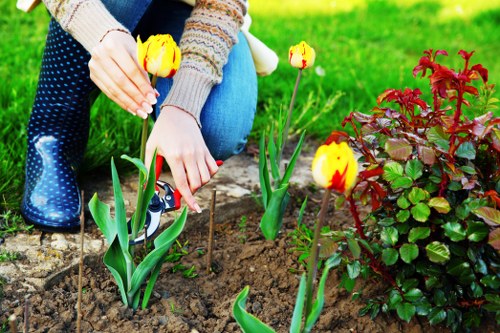
Our sustainable rubbish gardening area is designed to be a staging zone where materials are sorted, chipped, and prepared for reuse. We separate timber for wood recycling, set aside bulky hedge sections for chipping, and store fines for compost blending. Key activities include:- Wood chipping for mulch and biomass
- Composting of soft garden waste
- Segregation of recyclable plastics and metals from hedging supplies
Partnerships with charities and community projects are central to our circular model. Excess mulch and compost are donated to local allotment groups, schools, and community gardens. We maintain active relationships with charities focused on urban greening, community food growing, and habitat restoration. These partnerships ensure that useful materials are put to socially beneficial uses rather than landfilled.
Examples of collaboration include scheduled deliveries of mulch to community orchards, supply of pruned timber for habitat piles managed by conservation groups, and joint volunteer days where we support planting and maintenance activities. These efforts align our operations with local social objectives while keeping carbon and waste low.
Operational best practices for Lee hedge trimming include reusable containment systems, colour-coded sacks for different streams, and clear labeling so crews and transfer station staff can follow borough guidelines. We also document material tonnages to monitor progress toward our diversion goals.
Low-carbon vans and transport strategy are a practical priority. Hedge Trimming Lee is transitioning to a low-emission fleet: hybrid and electric vans are being phased in, supported by route optimisation software that reduces mileage and idle time. Our aim is to cut fleet emissions by 40% within five years compared to a 2023 baseline.
Electric vehicles handle smaller urban jobs while efficient hybrids support heavier loads. Charging is coordinated with depots and, where possible, powered from renewable energy tariffs. This ties our vehicle choices directly to the sustainability performance of the waste streams we manage.
 To ensure transparency we apply measurable performance metrics: weekly waste audits, monthly diversion reports, and an annual sustainability review. Our recycling percentage target of 85% is supported by incremental milestones: 65% within year one, 75% in year two, and the full target by year three. These metrics are essential to continuous improvement and community accountability.
 In summary, Hedge-Trimming Lee combines practical garden care with an ambitious recycling and sustainability programme. By using local transfer stations, partnering with charities, implementing a sustainable rubbish gardening area, and switching to low-carbon vans, we create a model that benefits gardens, neighbours, and the wider borough. Whether you refer to us as Hedge Trimming Lee, Lee hedge trimming, or hedge-trimming in Lee, our focus remains the same: reduce waste, support reuse, and keep our streets and green spaces healthy for generations to come.